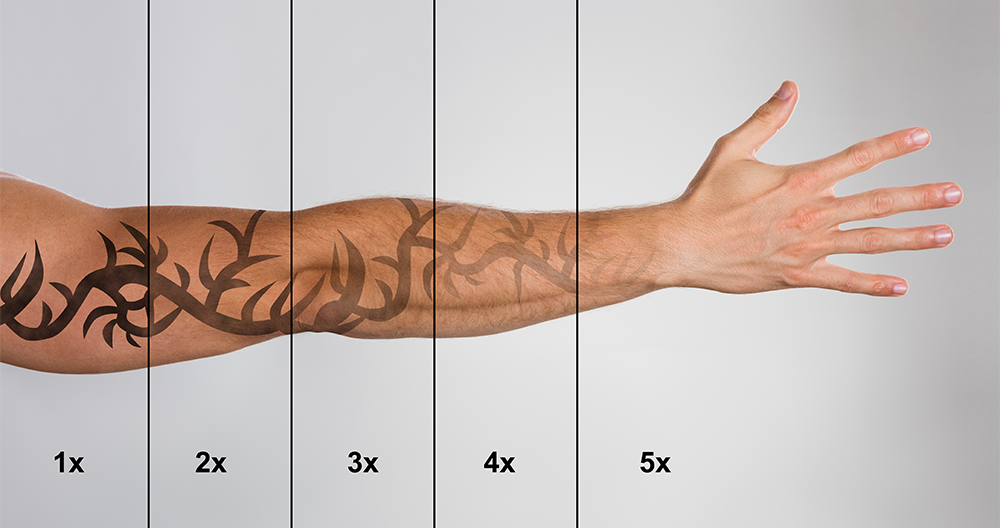
Why It Can’t Be Done in One Session
Tattoo removal mainly works through laser treatments. The laser breaks the ink into very tiny particles, and then your body slowly removes those particles over time. This doesn’t happen instantly.
Your skin needs time to heal, and your body needs time to process the broken ink. That’s why sessions are usually spaced out every 6–8 weeks. Rushing this can damage your skin and won’t give better results.
So, How Many Sessions Are Needed?
For most people, it takes around 6 to 10 sessions to see major fading or complete removal. But don’t treat this as a fixed number. Some tattoos fade faster, while others may take 12 or even more sessions.
Think of it like this—tattoo removal is more like a slow fade than an instant erase.
What Decides the Number of Sessions?
-
1. Size of the Tattoo:
A small tattoo may fade quicker, while a large design will naturally need more sessions because there is more ink. -
2. Ink Colours:
Black ink responds the best to laser treatment. Colours like green, blue, and yellow are harder to break down, so they take extra time. -
3. Age of the Tattoo:
Older tattoos are usually easier to remove because they have already faded a bit over time. Fresh tattoos are more stubborn. -
4. Placement on the Body:
Areas with good blood circulation (like arms or chest) heal faster and show better results. Tattoos on feet or fingers may take longer. -
5. Skin Type:
Every skin type reacts differently to laser. Professionals adjust the treatment based on your skin tone for safe results. -
6. Your Body’s Healing Power:
Your immune system plays a big role. A healthy lifestyle can help your body clear ink particles faster.
What You’ll Notice After Each Session
Don’t expect instant results after the first sitting. Tattoo removal works slowly. After each session, the tattoo will look slightly lighter.
You may notice:
- Mild redness
- Slight swelling
- Small blisters (sometimes)
These are normal and usually settle within a few days.
Can You Reduce the Number of Sessions?
You can’t drastically cut down sessions, but you can help your body respond better:
- Drink enough water
- Eat healthy foods
- Avoid sun exposure on the tattoo
- Follow proper aftercare
These small steps can make a big difference over time.
Final Thoughts
Tattoo removal is a process that needs patience. On average, it takes several sessions spread over months to achieve clear skin. The exact number depends on your tattoo, your skin, and how your body heals.
Instead of focusing only on “how many sessions,” it’s better to focus on consistent treatment and proper care. With time and the right approach, your tattoo will gradually fade away—and so will the story behind it, if that’s what you want.


