Laser Tattoo Removal Treatment
Understanding the Science

How Tattoo Removal Works

Tattoos are permanent because tattoo ink particles are deposited into the deeper dermal layer of the skin. These ink particles are too large for the body's natural immune system to break down and eliminate.

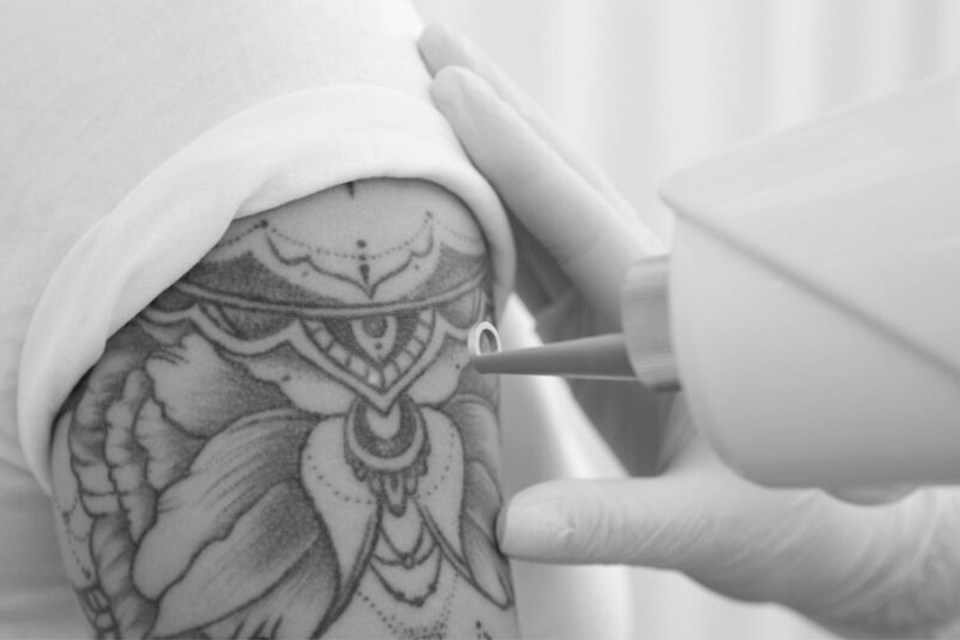
Modern Laser Tattoo Removal relies on the principle of Selective Photothermolysis. High-intensity laser beams penetrate the outer skin layers to selectively target ink pigments. The laser energy heats and shatters the ink particles into microscopic fragments. Over the following weeks, your body's lymphatic system naturally filters and flushes away these shattered particles, gradually fading the tattoo until it disappears.

Safe & Non-Invasive Scar-Free Results Targets All Ink Colors FDA Approved Laser Tech
Equipment & Technology Guide

Types of Tattoo Removal Machines

Different tattoo inks, depths, and skin types require specialized laser wavelengths and pulse durations. Here is an overview of the industry-leading laser machines used in modern tattoo removal studios.

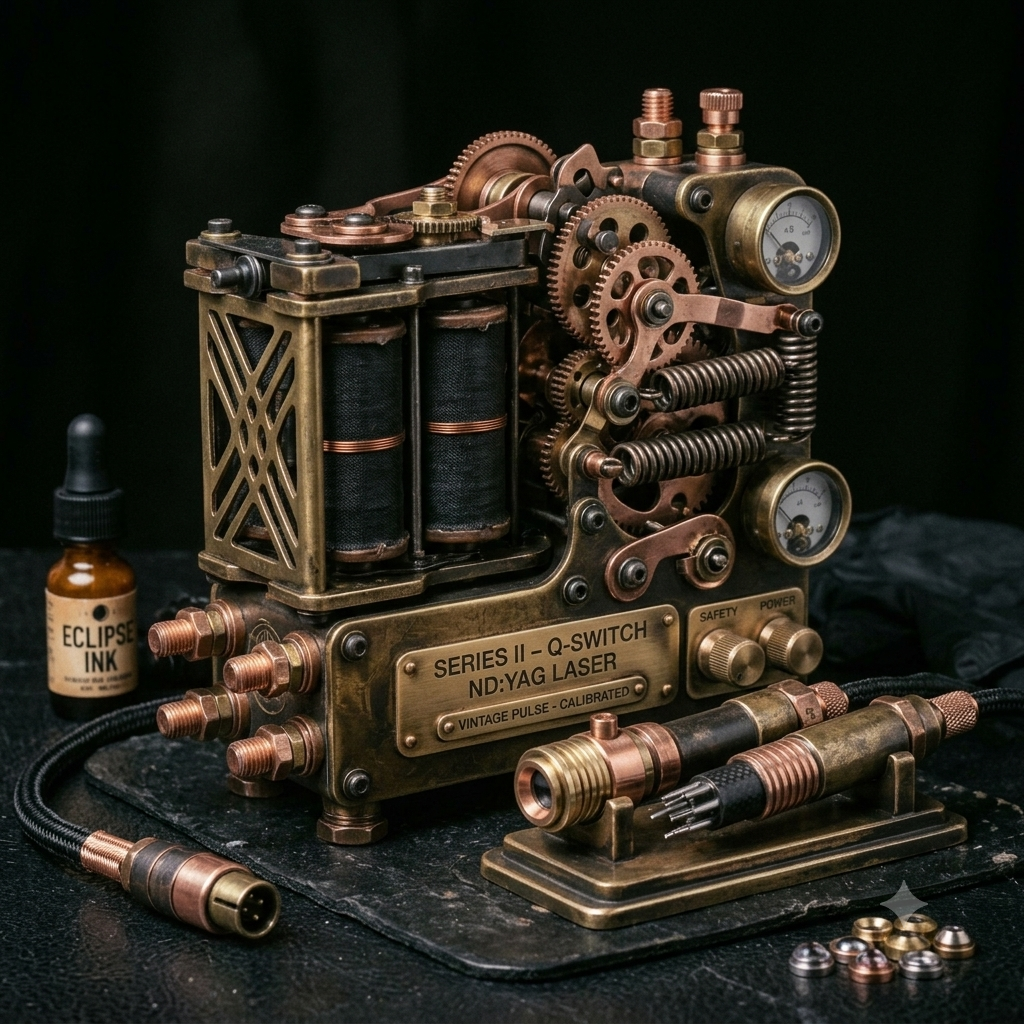
Q-Switched Nd YAG Laser Machine
1. Q-Switched Nd:YAG Laser Machine
1064 nm Wavelength 532 nm Wavelength Nanosecond Pulses

The Q-Switched Nd:YAG Laser is the global gold standard for tattoo removal. It operates on two distinct wavelengths to effectively target different ink pigment spectrums:

  • 1064 nm Wavelength: Deeply penetrates the dermis to target black, dark blue, dark brown, and grey inks. Safe for dark skin tones (Fitzpatrick IV-VI).
  • 532 nm Wavelength: Targets red, orange, purple, and warm pigment hues in the upper dermal layers.

Mechanism: Emits ultra-short nanosecond pulses of light that create intense photo-thermal shockwaves to shatter ink without overheating surrounding skin tissue.

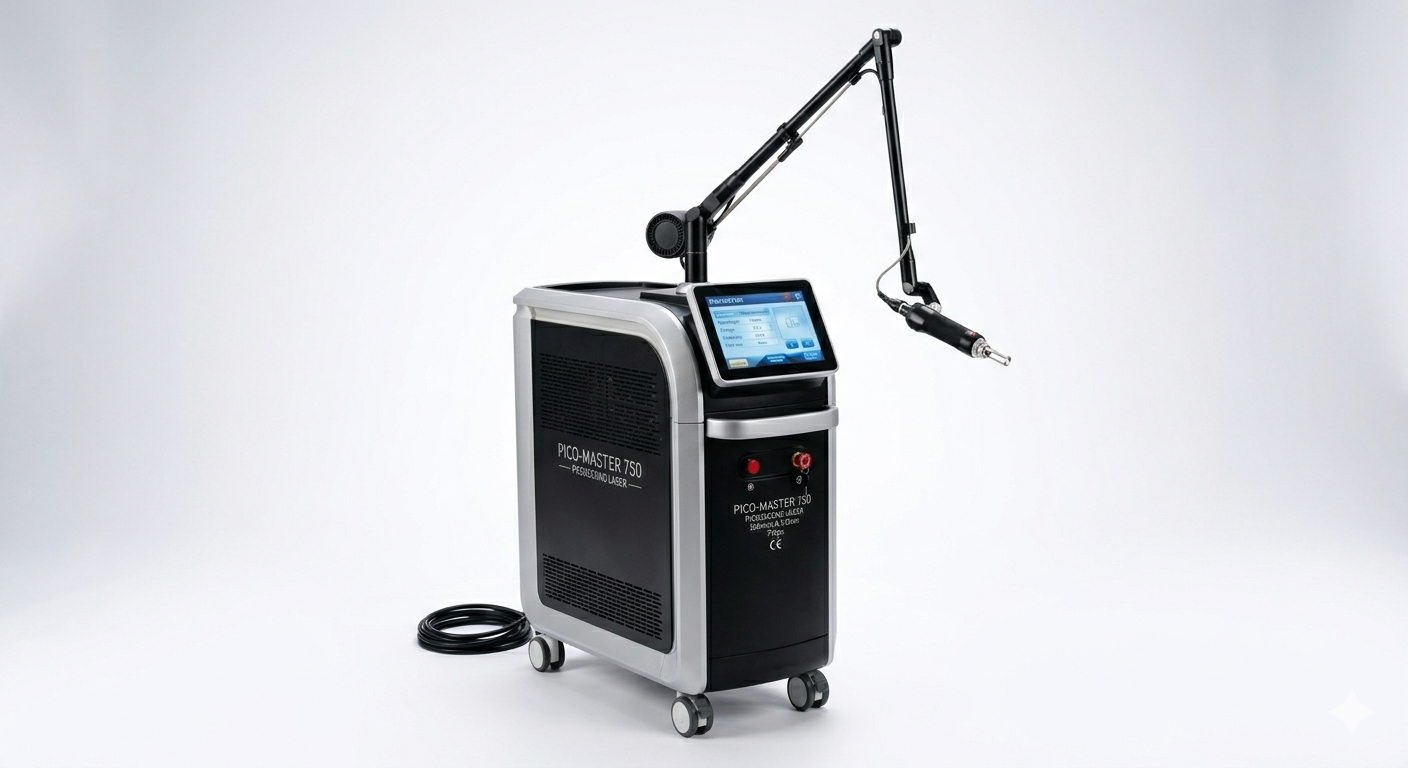
Picosecond Pico Laser Machine
2. Picosecond (Pico) Laser Machine
Picosecond Pulses Photo-Acoustic Wave Fastest Clearance

Picosecond Lasers represent the latest leap in laser dermatological engineering. Delivering laser pulses in trillionths of a second (picoseconds), Pico machines deliver predominantly photo-acoustic pressure waves rather than heat.

  • Dust-Like Shattering: Pulverizes ink into fine, dust-like particles that the immune system flushes out significantly faster.
  • Fewer Sessions Required: Clears stubborn or previously treated tattoos in 30-50% fewer sessions compared to traditional nanosecond lasers.
  • Minimal Thermal Risk: Reduces risk of hyperpigmentation or thermal injury to skin.
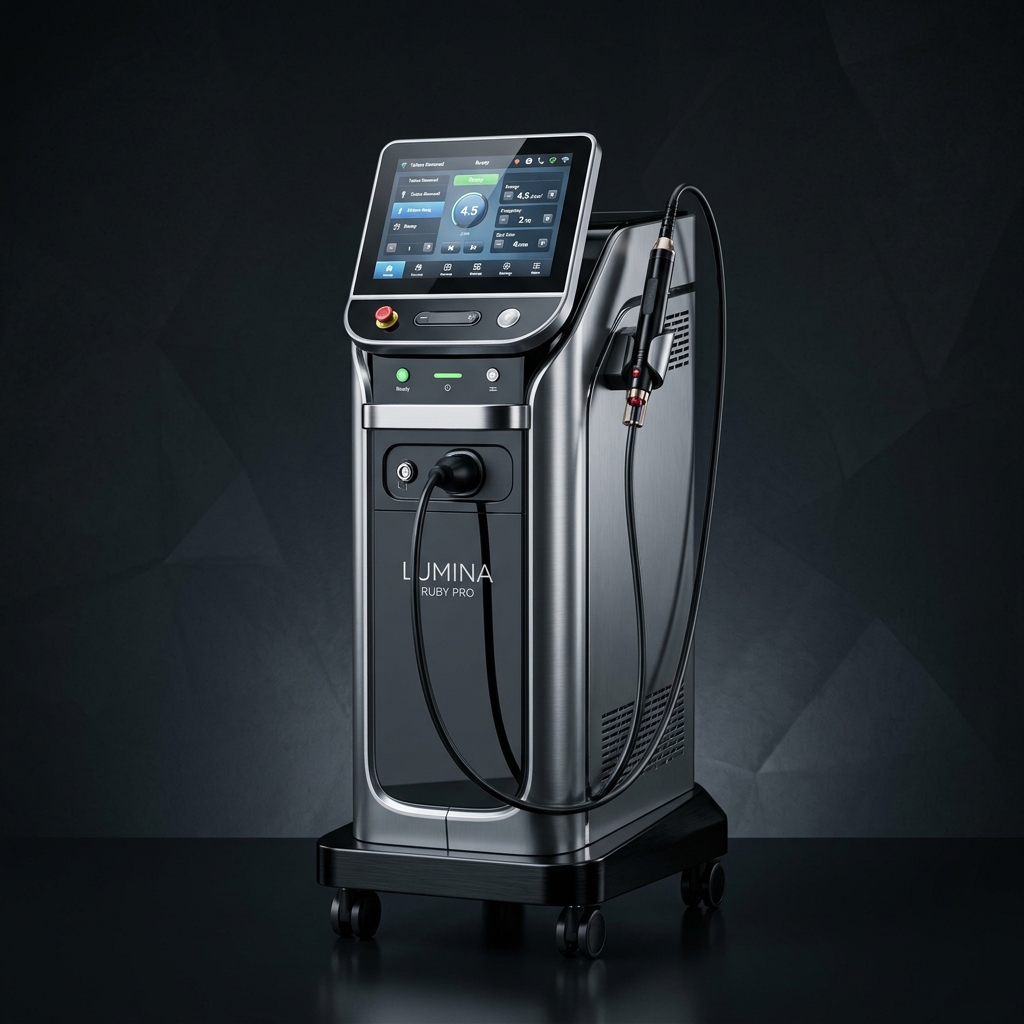
Ruby Laser Tattoo Removal Machine
3. Q-Switched Ruby Laser Machine (694 nm)
694 nm Wavelength Green & Teal Inks High Absorption

The Ruby Laser produces a 694 nm red light beam that is exceptionally absorbed by green, teal, turquoise, and black pigments. It is specifically used as a specialized machine for stubborn green ink shades that standard lasers struggle to lift.

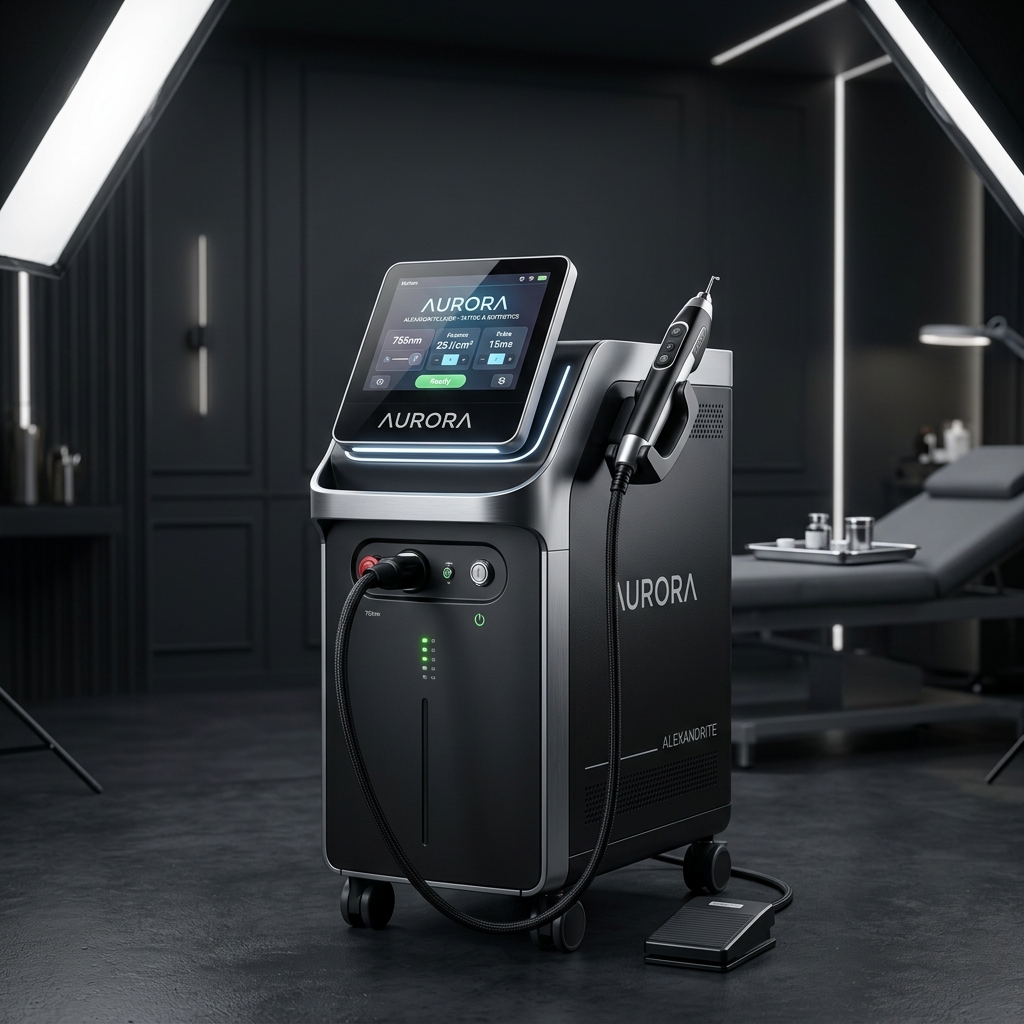
Alexandrite Laser Machine
4. Q-Switched Alexandrite Laser Machine (755 nm)
755 nm Wavelength Blue & Green Inks Precision Target

The Alexandrite Laser emits a 755 nm wavelength optimized for stubborn green, blue, and black ink pigments. It provides an excellent balance between light penetration and pigment absorption, especially on fair to medium skin complexions.

Skin Cooling Chilling Device
5. Epidermal Cryo Cooling Systems (-30°C Cold Air Stream)
Pain Minimization Epidermal Protection Continuous Cooling

An indispensable companion machine during laser tattoo removal is the Cold Air Cryo Chilling System. This machine continuously blows chilled air down to -30°C onto the skin surface before, during, and after laser firing.

Benefits: Numbs the skin naturally, dramatically reduces pain perception, prevents epidermal swelling/blistering, and ensures maximum patient comfort throughout the session.

Technical Comparison

Laser Machine Comparison Matrix

Laser Machine Type Wavelength Target Ink Colors Pulse Duration Skin Type Suitability Avg. Sessions
Q-Switched Nd:YAG 1064 nm / 532 nm Black, Dark Blue, Brown, Red, Orange Nanosecond (10-9 s) All Skin Types (Types I - VI) 6 - 10 Sessions
Picosecond (Pico) 1064 nm / 755 nm / 532 nm All Colors (Black, Red, Green, Blue, Purple) Picosecond (10-12 s) All Skin Types (Types I - VI) 4 - 7 Sessions
Q-Switched Ruby 694 nm Green, Teal, Turquoise, Black Nanosecond (10-9 s) Fair to Light Skin (Types I - III) 6 - 10 Sessions
Q-Switched Alexandrite 755 nm Green, Blue, Black, Grey Nanosecond (10-9 s) Fair to Medium Skin (Types I - IV) 6 - 9 Sessions
What To Expect

The Tattoo Removal Journey

1
Consultation & Skin Analysis

We examine your tattoo size, ink depth, color spectrum, skin Fitzpatrick type, and health history to select the precise laser wavelength and machine settings.

2
Skin Preparation & Cooling

The target skin area is cleansed and pre-cooled with our continuous sub-zero cryo chilling system (or topical anesthetic cream upon request) to maximize comfort.

3
Targeted Laser Treatment

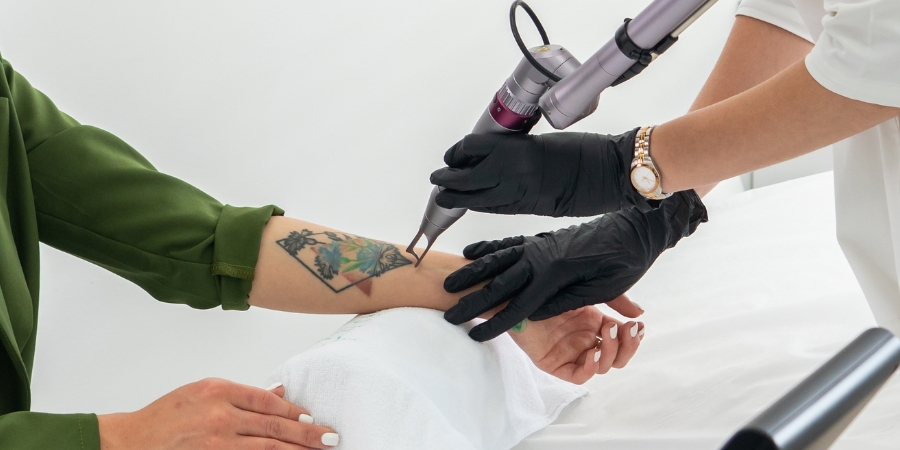
The laser handpiece delivers rapid, targeted light pulses over the tattoo. You will observe immediate "frosting" (temporary white oxidation reaction), indicating ink shattering.

4
Post-Care & Immune Flushing

Soothing antibacterial ointment and sterile dressing are applied. Over 4 to 8 weeks between sessions, your body's immune system flushes out shattered ink particles.

Laser Tattoo Removal Session
Key Considerations

Factors Affecting Tattoo Removal Results

Ink Colors & Types
Black and dark blue inks absorb all laser wavelengths and fade fastest. Bright greens, light blues, and neon yellows require specific wavelengths (Ruby/Alexandrite/Pico).
Tattoo Age & Depth
Older tattoos have naturally broken down over time and fade quicker. Amateur tattoos with shallow ink take fewer sessions than deep, dense professional tattoos.
Body Location & Blood Flow
Tattoos located closer to the heart (chest, neck, back) experience higher vascular circulation, enabling faster lymphatic clearance of shattered ink particles.

Ready to Remove or Lighten Your Tattoo?

Book a free confidential consultation with our certified laser specialists at Remy Tattoo Studio Nagercoil.

Book Free Consultation WhatsApp Us
Common Questions

Tattoo Removal FAQs

  • How many sessions will it take to completely remove my tattoo?
    On average, it takes between 6 to 10 sessions depending on the tattoo's size, ink density, color, depth, and age. Some tattoos may fade faster, while others take longer.
  • Is laser tattoo removal painful?
    Most clients describe the sensation as similar to a rubber band snapping against the skin. We use advanced skin-cooling devices to minimize discomfort and ensure a tolerable experience.
  • Will the laser treatment leave a scar?
    With our advanced Q-switched Nd:YAG and Picosecond laser technology, scarring is extremely rare. Following proper post-treatment aftercare guidelines is crucial to ensure clean, scar-free healing.
  • How long should I wait between tattoo removal sessions?
    Sessions are typically spaced 6 to 8 weeks apart. This allows your skin enough time to heal fully and your body's immune system to flush out the shattered ink particles.
  • Can all tattoo ink colors be completely removed?
    Black and dark blue inks are the easiest to remove. Colors like green, yellow, and bright red require specific laser wavelengths (like Ruby or Alexandrite) and may take additional sessions.
  • What is the recommended aftercare process?
    Keep the treated area clean and dry for the first 24 hours. Apply recommended antibacterial ointment, avoid direct sun exposure, and refrain from picking or scratching any scabs or blisters that may form.
WhatsApp